

Color Rules for the Color-Shy
A gentle, practical approach to building color confidence — even if you don’t trust your eye yet.

Pink accents in the draperies and rug complement cool neutral wood tones in this kitchen.
If you’ve ever thought, “I’m just not good at choosing colors,” you’re not alone.
Many people struggle to choose paint colors because they don’t trust their eye. They second-guess undertones, worry about getting it wrong, and feel overwhelmed by options. This doesn’t mean they lack taste. It means they haven’t been given a supportive framework for making color decisions, leaving them feeling “color-shy.” Using color rules isn’t about rigid design laws. They’re gentle guidelines to help you build color confidence without judgment or pressure. This article shares helpful, practical Bridget Beari Color Rules that aim to ease your worries, simplify decisions, and guide you in creating a confident, reliable process for selecting colors that genuinely feel right for your home.
Color Confidence Is a Skill, Not an Instinct
Having an “eye for color” is not an inborn talent. It’s a learned skill. People who seem naturally confident with interior color choices are usually relying on experience, repetition, and systems, even if they call it instinct. If choosing color feels stressful, the issue isn’t your taste. It’s the absence of a process you can trust.
Here are a few of our Bridget Beari Color Rules to help with the process:
Color Rule #9: Get in the Mood
If you don’t yet trust your eye, don’t start with visuals. Start by asking how you want the room to feel:
calm
grounded
light
focused
cozy
Designing with emotion in mind is one of the simplest ways to narrow paint color choices and reduce overwhelm. Feelings are easier to trust than appearances.
Color Rule #64: Swatch and Learn
Too many paint choices create anxiety, not clarity. Instead of comparing dozens of swatches, intentionally limit yourself to three to five paint colors that already align with your emotional goal. This reduces decision fatigue and gives your eyes space to learn. Confidence grows faster when choices are manageable.
color Rule #8: Upon Reflection
Paint color is deeply affected by light. Natural light, artificial light, and time of day all change how a color appears. A color that feels wrong may not be a bad color; it may simply be reacting poorly to the space's lighting. Always test paint colors in the room and observe them over time before deciding.
color Rule #55: Baby Steps
If you’re unsure of your color instincts, don’t go all in at once. Starting small is a great way to test your color choices, especially for people who feel anxious about bold hues.
color Rule #49: A Case for Negative Space
You don’t need bold or trendy colors on every wall or surface of your home. Repeating tones, aligning undertones, and allowing color to flow from room to room create a sense of ease. Negative space allows the eye to rest and helps distribute the visual weight evenly. In interior design, consistency often feels more confident than bravery.
color Rule #70: You Rule!
You don’t build color confidence by waiting until you feel 100% certain. You build it by making thoughtful, low-pressure choices and living with them. Over time, your preferences become clearer, and your eye becomes more reliable. Progress matters more than perfection, and making a supportive color choice is at the heart of the Bridget Beari Color Rules.
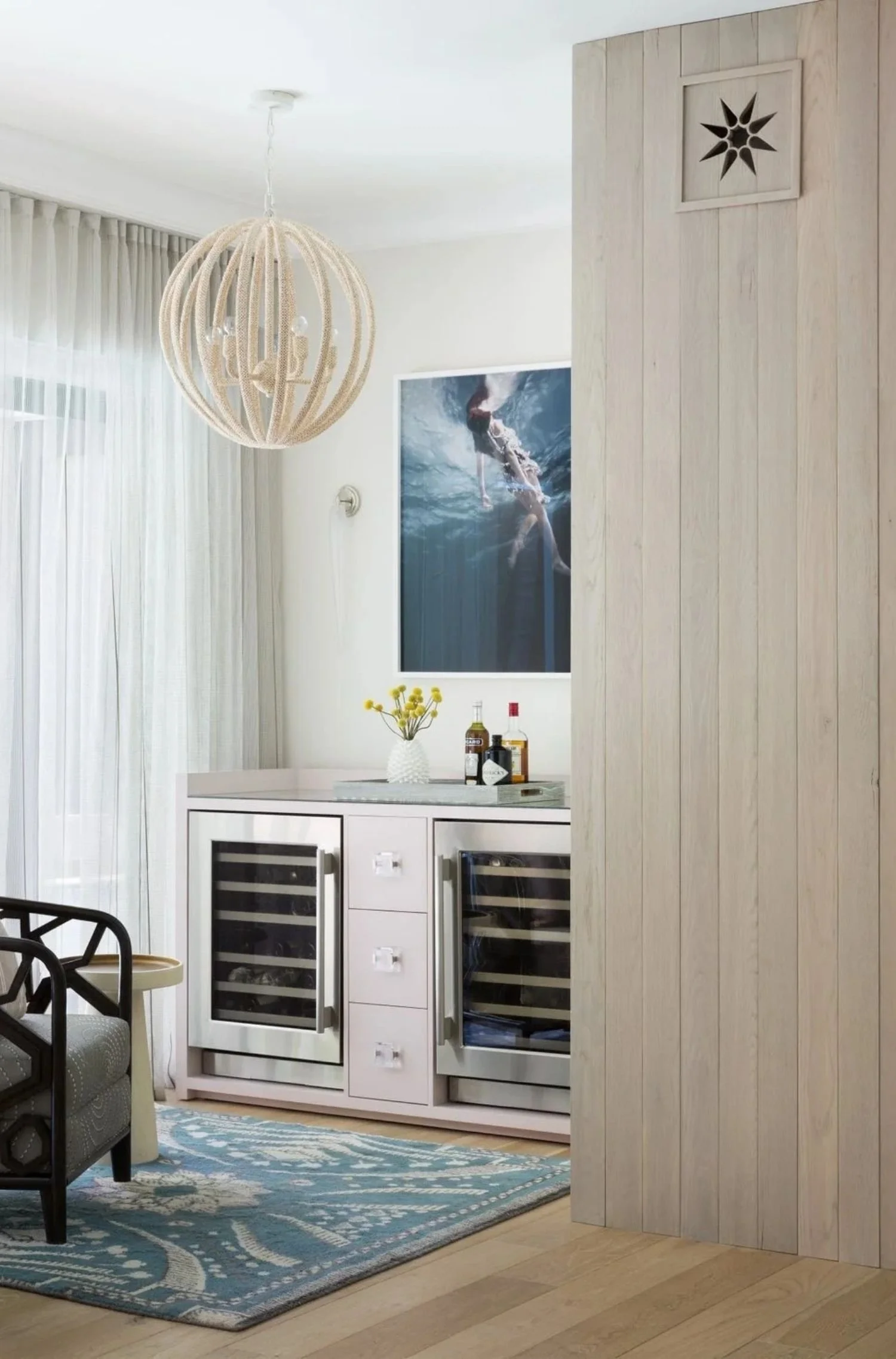
Light wood panelling and sheer draperies allow the blue decor to pop in this sitting room.
-
Feeling “color-shy” simply means you might feel a bit unsure or anxious about picking out the perfect paint colors. It’s usually more about not having a clear system in place, rather than a lack of good taste.
-
Begin with your feelings, keep your options simple, try out colors in your own lighting, and take small steps first. As you repeat the process and make easy decisions, your confidence will naturally grow.
-
Cohesion, undertone alignment, and intentional negative space often create a sense of calmness and confidence that can be even more effective than boldness alone.
-
The Bridget Beari Color Rules offer a reliable, emotionally rooted system that takes the pressure off and reduces uncertainty. Rather than relying solely on instinct, you can follow a process you know you can trust, and use again and again.
Try the bridget beari color rules approach
Rather than relying on trends or rigid rules, this approach focuses on emotional comfort, intuitive decision-making, and repeatable systems that help people feel supported in their homes.
You don’t need a perfect eye to choose well.
You need a process that meets you where you are, and that’s why I wrote the Bridget Beari Color Rules.